We don’t usually question water.
It’s one of those quiet constants in life—you turn the tap, fill a glass, move on. No drama, no hesitation. It’s easy to assume that if it looks clear, it must be fine.
And most of the time, it is.
Related Style Intelligence
How Modern Water Treatment Technology Is Changing the Way We Think About Clean Water When the Warmth Fades: A Real-Life Look at Fixing Heating Systems Before It Gets Worse Learning to Trust Your Tap Again: A Real-World Take on Better Water at HomeBut every now and then, something shifts. A slight taste you can’t ignore. A smell that lingers for just a second too long. Or maybe it’s not even that obvious—just a feeling that something’s… off.
That’s usually where the curiosity begins.
The Gap Between “Safe” and “Ideal”
Municipal water treatment does its job well. It ensures that water meets safety standards, removes harmful contaminants, and makes it suitable for everyday use.
Related Style Intelligence
When Water Feels Better: The Subtle Upgrade That Changes Your Home When Water Quality Shapes a Business More Than You RealizeBut “safe” doesn’t always mean “perfect.”
There can still be chlorine, minerals, and trace elements that affect how water tastes, smells, and interacts with your home. These aren’t always dangerous—but they can be noticeable.
And once you notice them, it’s hard to unnotice.
That’s why more people are starting to look into water purification systems—not out of fear, but out of a desire to improve something they use every single day.
The Small Details That Add Up
Water has a way of revealing its quality in subtle ways.
You see it in the spots left behind on dishes. You feel it in the way your skin reacts after a shower. You taste it in your morning tea or coffee.
None of these things are dramatic on their own.
But together, they create an experience.
And when that experience feels slightly off, even in small ways, it can affect how you feel about your home.
Improving water quality isn’t about chasing perfection. It’s about refining those everyday moments.
Starting With Something Simple
Not every solution needs to be complex.
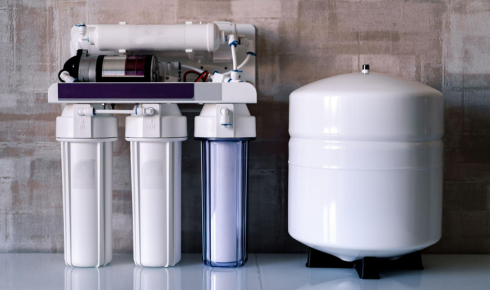
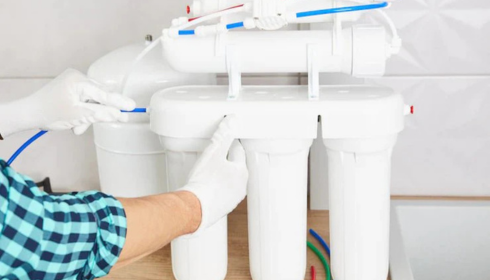
Sometimes, the most practical step is also the simplest—installing a water purifier filter at a single point, like your kitchen sink.
It’s a small change, but often one with immediate results.
Better-tasting water. Fewer impurities. A sense of control over what you’re drinking.
And interestingly, that small improvement often leads to a bigger realization.
If this one change makes such a difference, what else could be improved?
Understanding What Your Water Actually Needs
Here’s where things get a bit more personal.
Water quality isn’t the same everywhere. It varies based on location, source, and even the age of your plumbing.
What works for one home might not be necessary for another.
That’s why it helps to take a step back and understand your specific situation.
Does your water have a noticeable taste or smell?
Do you see buildup on fixtures or appliances?
Are there signs of mineral content or chlorine presence?
These clues can guide your decisions.
Because the goal isn’t to install the most advanced system available—it’s to find something that fits your needs.
The Role of Professional Insight
At some point, many homeowners reach a stage where they want a clearer understanding of their water.
Not guesses, not assumptions—just clarity.
That’s where a water purification company can be helpful.
They bring experience, testing methods, and practical recommendations tailored to your situation.
It’s not about pushing products. It’s about understanding what’s in your water and what, if anything, should be done about it.
And sometimes, just having that information can make all the difference.
The Quiet Benefits You Don’t Expect
Improving water quality doesn’t usually come with a dramatic reveal.
There’s no moment where everything suddenly feels different.
Instead, the changes are gradual.
Your coffee tastes cleaner. Your dishes come out clearer. Your skin feels a bit softer after a shower.
These aren’t life-changing shifts on their own.
But over time, they add up.
And that’s often what people are really looking for—a better everyday experience, not a complete transformation.
It Doesn’t Have to Be Overcomplicated
One of the biggest misconceptions about water purification is that it’s complicated.
Too many systems. Too many options. Too many decisions.
But it doesn’t have to be that way.
You can start small. Test your water. Understand what you’re dealing with.
From there, you can decide what makes sense for your home.
Sometimes it’s a simple filter. Sometimes it’s a more comprehensive system.
Either way, it should feel like a solution—not a burden.
A Shift in Perspective
What’s interesting is how your relationship with water changes once you start paying attention.
It’s no longer just background noise.
You notice how it tastes, how it feels, how it affects your daily routines.
And that awareness tends to stick.
You become more intentional—not in an overwhelming way, but in a way that feels natural.
A Thought to Carry With You
If you’ve ever paused to question your water—even briefly—it’s probably not random.
It’s a small signal.
Not a warning, not a problem—just a moment of awareness.
You don’t need to act immediately. You don’t need to make big changes overnight.
But understanding your water—what’s in it, how it affects your home—is a good place to start.
Because in the end, water isn’t just something you use.
It’s something you live with, every single day.
And sometimes, giving it a little more attention can quietly improve more than you expect.