


In the modern era of automation and smart devices, sensors play a pivotal role in ensuring accurate monitoring and control of various systems. Among these, temperature sensors and proximity switch sensors are widely used across industries ranging from automotive to consumer electronics, industrial manufacturing, and home automation. Understanding their functions, types, and applications can help businesses and individuals choose the right sensor for their needs.
What is a Temperature Sensor?
A temperature sensor is a device that measures the degree of heat energy present in a system or environment and converts it into a readable signal for monitoring or control purposes. These sensors are crucial for maintaining optimal operating conditions, preventing equipment damage, and ensuring safety. They are used in HVAC systems, medical devices, automotive engines, and industrial machinery, among other applications.
Types of Temperature Sensors
- Thermocouples
Thermocouples are widely used due to their wide temperature range and durability. They work on the principle of generating a voltage based on the temperature difference between two different metals. - Resistance Temperature Detectors (RTDs)
RTDs measure temperature based on the resistance change in a metal, typically platinum. They offer high accuracy and stability, making them ideal for industrial applications. - Thermistors
Thermistors are temperature-sensitive resistors that provide precise readings within a limited temperature range. They are commonly used in home appliances, medical instruments, and battery monitoring. - Infrared Sensors
Infrared temperature sensors detect heat from a distance by measuring infrared radiation. These are commonly used in non-contact temperature measurements such as in ovens or medical thermometers.
What is a Proximity Switch Sensor?
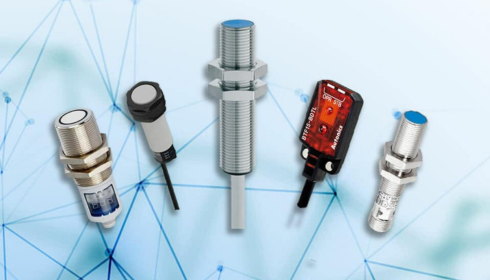
A proximity switch sensor is an electronic device that detects the presence or absence of an object without physical contact. It converts the object’s proximity into an electrical signal, which can trigger a system or alert the operator. These sensors are integral to automation systems, robotics, security systems, and manufacturing processes.
Types of Proximity Switch Sensors
- Inductive Proximity Sensors
These sensors detect metallic objects using electromagnetic fields. They are highly durable and ideal for industrial machinery where metal detection is necessary. - Capacitive Proximity Sensors
Capacitive sensors detect both metallic and non-metallic objects, including liquids, powders, and plastics. They are versatile and commonly used in packaging, food processing, and chemical industries. - Ultrasonic Proximity Sensors
Ultrasonic sensors measure distance using sound waves. They are effective in environments where visual detection is challenging or for objects of various materials. - Photoelectric Sensors
These sensors use a light beam to detect objects. When an object interrupts or reflects the light, the sensor triggers a signal. Photoelectric sensors are widely used in conveyor systems and automated sorting lines.
Applications of Temperature and Proximity Sensors
The applications of temperature sensors are vast. In automotive systems, they monitor engine and cabin temperatures to optimize performance and safety. In industrial processes, they ensure that machinery operates within safe thermal limits. In homes, they are integral to smart thermostats and appliances, improving energy efficiency.
Proximity switch sensors are equally versatile. In factories, they help automate assembly lines by detecting components’ positions. In robotics, they provide feedback for precise movements. Security systems use them to detect intruders or monitor doors, while consumer electronics integrate them into devices to sense gestures or screen proximity.
Conclusion
Both temperature sensors and proximity switch sensors are essential components in the modern technological landscape. While temperature sensors focus on measuring and monitoring thermal conditions, proximity switch sensors excel in detecting the presence or absence of objects without contact. Understanding their types, applications, and benefits can significantly improve system efficiency, safety, and performance. Whether in industrial automation, automotive, or everyday consumer electronics, these sensors ensure that devices function reliably and accurately.