

Where Strength and Sensitivity Work Together
Orthopedic surgery has always fascinated me for one simple reason — it sits right at the intersection of power and delicacy. Think about it for a moment. Surgeons are working with the strongest structures in the human body — bones — yet they must do so with incredible care and precision.
It’s not just about cutting or fixing. It’s about restoring movement, reducing pain, and sometimes giving someone their independence back. And none of that happens through skill alone.
Behind every successful orthopedic procedure lies a carefully selected set of tools, each designed to handle specific tasks with remarkable accuracy. These instruments don’t just assist surgeons — they shape outcomes.
They are, in many ways, the silent partners in healing.
The Role of Precision in Bone Work
Unlike soft tissue surgery, orthopedic procedures often require instruments capable of applying controlled force while maintaining fine precision. The goal isn’t simply to remove or repair bone — it’s to reshape it in a way that supports long-term function.
This is where osteotomes play a crucial role.
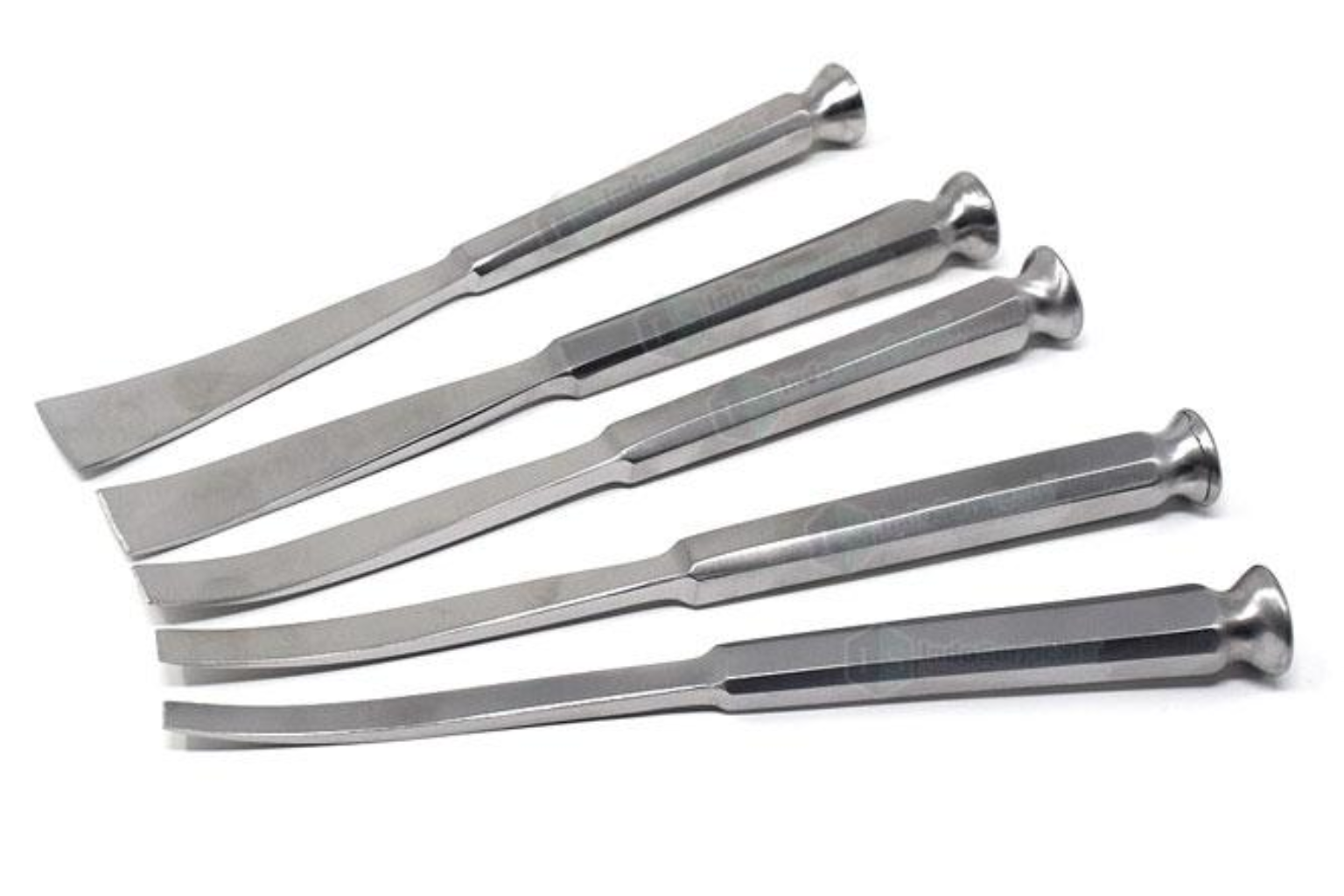
Osteotomes are specialized cutting instruments used to shape or divide bone with controlled force. They resemble chisels, but their design is far more sophisticated. Surgeons use them to create precise cuts without damaging surrounding tissues.
What makes osteotomes particularly fascinating is the level of skill required to use them effectively. Surgeons rely heavily on tactile feedback — the subtle sensation transmitted through the instrument as it interacts with bone.
It’s almost like sculpting. Each movement must be deliberate, measured, and guided by both experience and intuition.
Clearing the Path for Healing
Not all orthopedic procedures involve cutting through bone. Sometimes, the goal is to remove damaged or infected tissue to create a healthy environment for healing.
This is where curettes come into the picture.
Curettes are spoon-shaped instruments designed to scrape or remove unwanted tissue from bone surfaces. They’re commonly used in procedures addressing bone infections, tumors, or joint preparation.
Their curved design allows surgeons to work within confined spaces, removing material gradually and precisely. The process requires patience and control, as excessive force can damage healthy tissue.
What’s interesting is how curettes reflect a different side of orthopedic surgery — one that emphasizes careful cleaning and preparation rather than forceful intervention.
They remind us that healing often begins with creating the right conditions.
Holding Everything Steady
In many orthopedic procedures, maintaining stability is just as important as cutting or shaping. Bones and implants must be held securely in place while surgeons perform delicate adjustments.
That’s where orthopedic clamps become essential.
These instruments are designed to provide a firm grip without causing unnecessary damage to bone structures. They help align fractures, stabilize implants, and maintain positioning throughout surgery.
Orthopedic clamps often feature adjustable locking mechanisms, allowing surgeons to apply consistent pressure without constant manual effort.
Their importance cannot be overstated. Without reliable stabilization, even the most precise surgical techniques would be difficult to execute effectively.
In a way, clamps represent the foundation of orthopedic procedures — holding everything steady so that other steps can proceed smoothly.
The Human Connection to Surgical Tools
One aspect that rarely gets discussed is how personal surgical instruments can feel to those who use them.
Surgeons don’t just pick up tools randomly. Over time, they develop preferences based on comfort, balance, and reliability. They learn exactly how each instrument responds under different conditions.
There’s a certain trust involved in this relationship. During complex procedures, surgeons rely on their tools to perform consistently, allowing them to focus entirely on the patient.
Behind these instruments lies a network of professionals — engineers who design them, manufacturers who produce them, and technicians who ensure they remain sterile and functional.
It’s a collaborative effort that supports every step of surgical care.
Why Traditional Tools Still Matter
In today’s era of robotic surgery and advanced imaging systems, it might seem surprising that manual orthopedic instruments remain so essential.
But there’s a simple reason for this — tactile feedback.
Manual tools allow surgeons to feel subtle differences in bone density, detect resistance changes, and adjust their technique instantly. This sensory input is something machines still struggle to replicate fully.
Additionally, traditional instruments offer unmatched reliability. They don’t rely on software or electricity, making them indispensable in both high-tech hospitals and resource-limited settings.
Sometimes, the simplest tools remain the most dependable.
The Evolution of Orthopedic Instrumentation
While traditional designs remain important, orthopedic instruments continue to evolve.
Modern tools are now made from advanced materials that are lighter, stronger, and more resistant to corrosion. Ergonomic improvements help reduce hand fatigue during lengthy procedures.
There’s also growing interest in integrating smart technologies. Some instruments are being developed with sensors that provide real-time feedback, helping surgeons maintain optimal pressure levels during procedures.
These innovations aim to enhance precision while maintaining the reliability that surgeons depend on.
Looking Toward the Future
The future of orthopedic surgery will likely blend traditional craftsmanship with cutting-edge technology.
Custom-designed instruments created through 3D printing may allow for personalized surgical approaches tailored to individual patients. Advanced imaging integration could further improve surgical accuracy.
Yet despite these advancements, the fundamental role of orthopedic tools will remain unchanged — enabling surgeons to restore mobility and improve quality of life.
A Quiet Role in Transforming Lives
For patients, orthopedic surgery often marks a turning point — the moment when pain begins to fade, movement returns, and everyday life becomes easier again.
Behind that transformation lies a carefully orchestrated system of expertise, technology, and tools working together.
Orthopedic instruments may not receive recognition, but their impact is profound. They support precision, ensure stability, and help turn surgical knowledge into life-changing results.